


“One property each” sounds like an even division. In a property-heavy estate, it can leave one child with a debt-free home and another with an apartment that still carries a large loan.
The harder question is what each child will actually receive and be able to use. A fair arrangement may involve separate properties, a cash adjustment, shared ownership or a sale. Each needs a workable answer to the debts and expenses attached to it.
The examples below concern will-based planning for non-Muslim estates and land in Peninsular Malaysia. Muslim succession, including faraid, and the land and succession rules of Sabah and Sarawak require separate treatment.
Compare the value left after debt
Begin with what the parent actually owns. If a property is jointly owned, the plan concerns the parent’s interest, not everyone else’s share. Also account for provision intended for a surviving spouse or other dependants before dividing the balance among the children.
Consider this simplified example of two wholly owned properties and two adult children. The figures are illustrative, not market valuations.
| Property | Market value | Loan balance | Equity before other costs |
| Family home | RM1,800,000 | RM0 | RM1,800,000 |
| Rental apartment | RM1,200,000 | RM600,000 | RM600,000 |
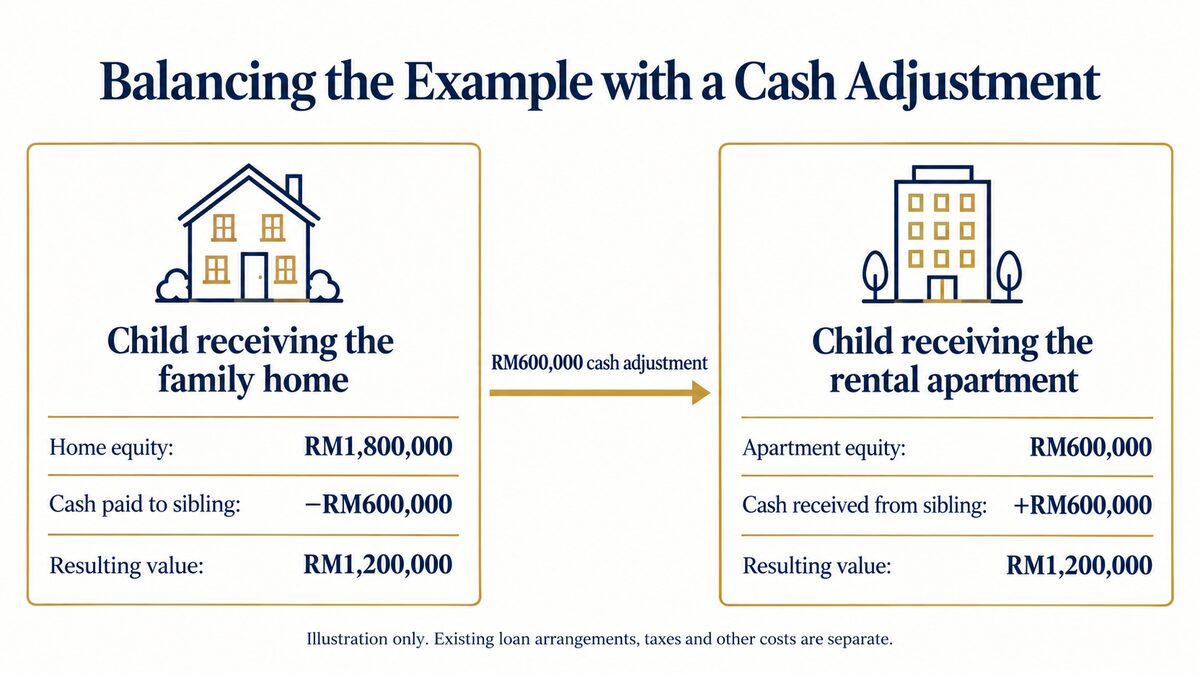
The combined equity is RM2.4 million, giving a starting target of RM1.2 million each if equal value is the aim. One way to balance this example is for the child receiving the home to provide RM600,000 to the child receiving the apartment. Each then receives RM1.2 million in economic value.
That calculation excludes other assets, debts, taxes and costs. It does not mean the apartment’s loan can simply pass to its recipient. Repayment or refinancing arrangements still have to be made, separately from the cash adjustment.
The debt wording in the estate documents matters. Section 70 of the Probate and Administration Act 1959 generally places the secured debt burden on the charged property when allocating that burden between people claiming through the deceased, unless a contrary intention is expressed. A general instruction to pay debts is not, by itself, enough to reverse that position. The lender’s rights remain unaffected.
Decide what fair means for this family
Equal value is one possible objective. A parent may instead prioritise housing for a child with care needs, preserve a rental income stream, or recognise substantial support already given during life. Those choices need an explanation and operative instructions; a broad request to “be fair” leaves the executor to invent the method.
Agree how values will be established. Use an independent valuation and specify the relevant date for any adjustment. A fixed cash amount based on today’s prices may produce a different balance years later, while a formula tied to later values needs a clear calculation and a way to resolve disagreement.
A property’s use also affects the practical outcome. A family home provides somewhere to live but may produce no income. A rental property brings receipts and obligations. Compare what remains after maintenance, management charges, insurance, taxes, vacancy and any financing payments, rather than treating the advertised rent as spendable income.
If one child is to occupy a shared home, specify who pays the running costs and whether occupation is rent-free or involves payment to the others. Otherwise, equal registered shares can still leave one child receiving most of the day-to-day benefit.
Give the cash adjustment a source and a deadline
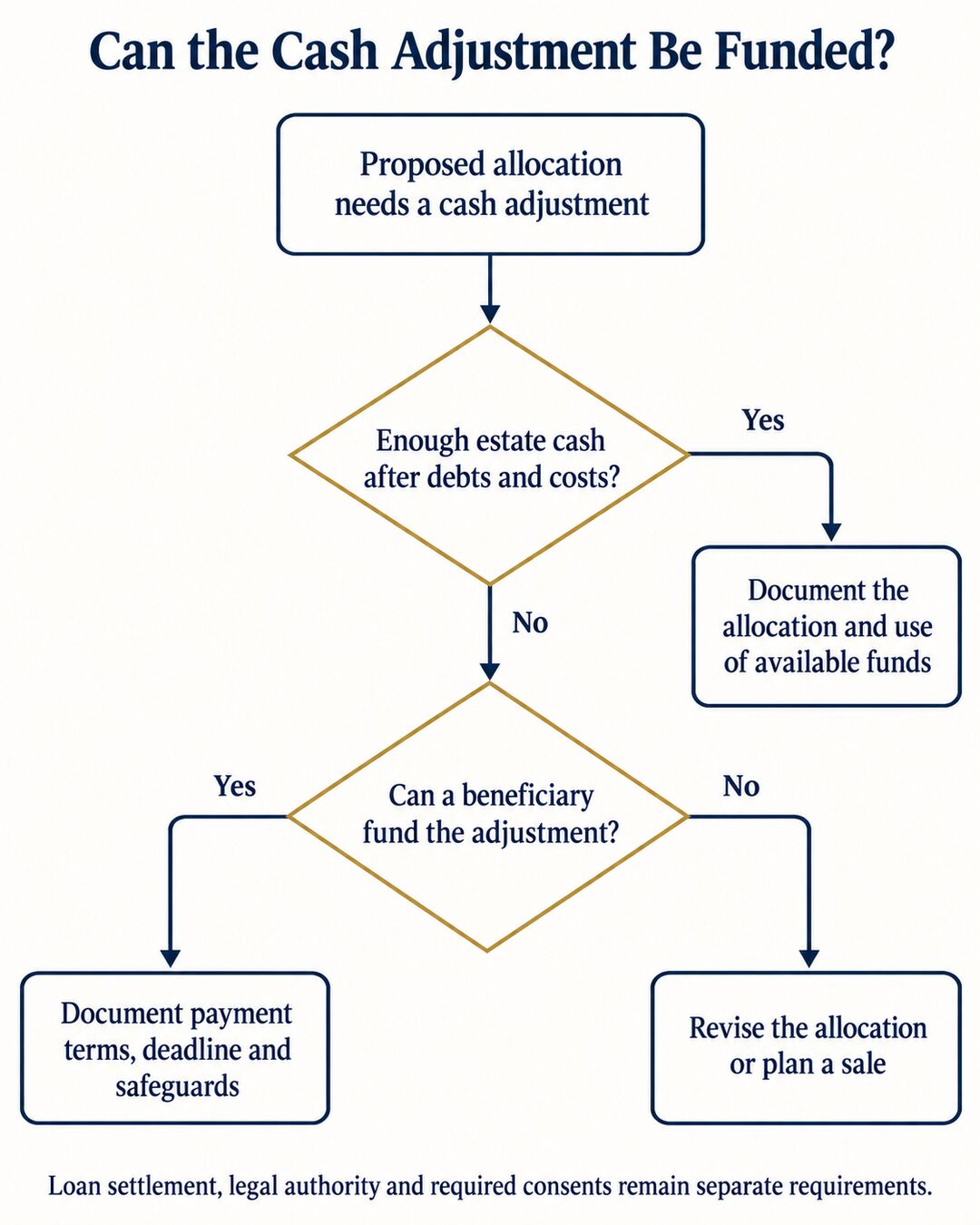
The RM600,000 adjustment in the example only works if someone can fund it. Available estate cash or investments may help balance other allocations, but only after allowing for estate debts and expenses. A property-rich estate with little accessible cash cannot promise payments merely because its total value is high.
If a child must supply the money, establish whether they can obtain the necessary financing or use their own funds. An expected future loan approval is not cash available to the estate. The arrangement needs a valuation method, a payment deadline and a stated consequence if funding fails.
Instalments may be possible under a properly structured arrangement, but the other child would be waiting for money instead of receiving it immediately. Address payment security, any agreed interest, default and when ownership can transfer. These terms need to work alongside the lender’s requirements and the property transfer arrangements.
Where retention cannot be funded, a sale may provide the cash needed to clear liabilities and divide the balance. If the family wants a child to have an opportunity to buy first, define the price-setting method and time limit, with authority and a fallback for an outside sale. Sentimental attachment does not fund a sibling’s share.
Keep property together only with a plan for sharing
Leaving each child a share of every property avoids choosing who gets which building, but creates continuing ownership decisions. Under sections 342–343 of the National Land Code, registered co-owners hold undivided shares. A half share is an interest in the whole property, not an automatic allocation of one floor or a particular room.
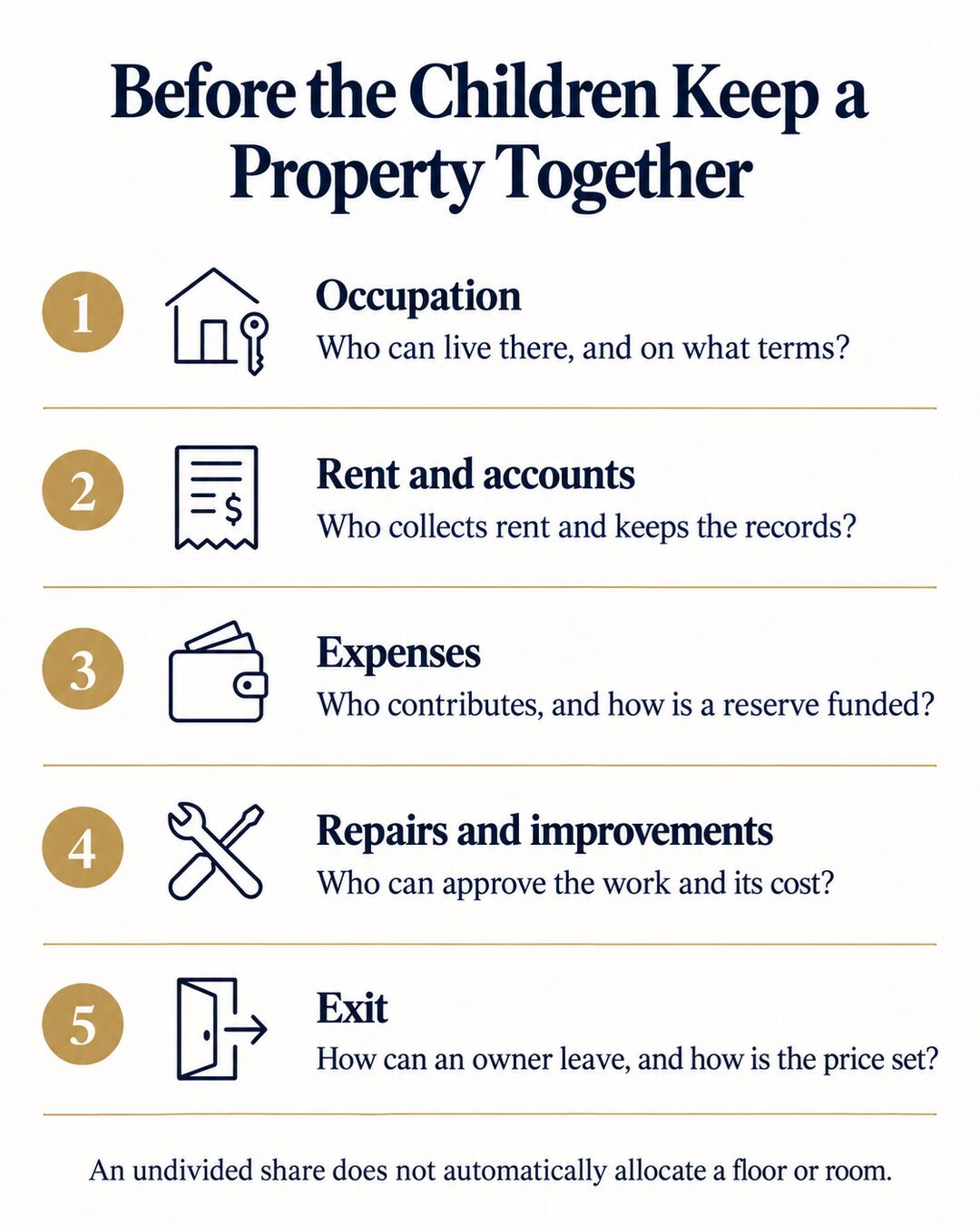
A practical arrangement needs rules for occupation, rent collection, expense contributions and approvals for repairs or improvements. Decide who manages tenants and accounts, how a repair reserve is funded, and what happens when an owner cannot contribute their share of costs.
Include a way out. Define how an owner can offer their interest to the others, how the price is determined, and what happens if nobody can buy. A co-owner’s share also does not automatically pass to the remaining co-owners on death, so the arrangement may eventually involve another generation or different family members.
A trust may be an alternative where the intention is to retain and manage rental assets together. It needs assets properly placed under it, defined beneficiary rights and funding for administration. The choice between personal shares and trust ownership belongs in the wider plan for the family’s assets.
Give the executor an answer when circumstances change
Translate the chosen allocation into the will and any supporting arrangements. State which interests are given to whom, how the secured debt burden is intended to fall, and how valuations and cash adjustments operate. The executor also needs appropriate powers for any intended sale or retention, subject to applicable legal requirements and consents.
Plan for a property being sold or replaced before death, and for an intended beneficiary dying first. A clause naming one apartment cannot be assumed to give the same child a substitute property or matching cash automatically.
Rent and bills continue while the estate is administered. Keep tenancy records, loan statements, title information and payment details accessible to the executor. Identify how essential outgoings will be met and how rent will be accounted for pending distribution, rather than assuming the child named for a property can immediately treat the rent as personal income.
A fair division on paper may not be workable if the estate lacks the cash to settle debts or balance property values. Contact Sim & Rahman to discuss how your will can address property allocation, cash adjustments and fallback arrangements before these become difficult decisions for your children.