

You may wish to leave assets to a non-family member in Malaysia, such as a friend’s child, a godchild, a long-serving employee or someone who cared for you. For many non-Muslims, this is generally possible—but the gift must be planned and documented correctly.
The answer is more nuanced for Muslims because Faraid, Wasiat and Hibah operate under a different legal framework. The beneficiary’s age, the type of asset and whether the gift should be received immediately or managed over time can also change the appropriate structure.
A clear estate plan turns a personal intention into instructions that an executor or trustee can actually carry out. The first step is understanding which rules apply to you and which assets your chosen document can legally control.
Can a Non-Muslim Name Someone Outside the Family?
For a non-Muslim estate in Peninsular Malaysia, the Wills Act 1959 generally allows a person of sound mind to dispose of property owned at death through a valid will. The Act does not require every beneficiary to be related to the person making the will.
This means a will may name a close friend, an unmarried partner, a friend’s child, a caregiver, an employee, a charitable organisation or another clearly identified recipient. The relationship itself is not what makes the gift valid.
However, testamentary freedom is not the same as an informal promise. A conversation, text message or handwritten note may not satisfy the formal requirements of a valid will.
Under sections 3 and 5 of the Wills Act 1959, the will must comply with requirements that include writing, execution and witnessing. The Act applies in Peninsular Malaysia and excludes wills made by persons professing Islam; Sabah and Sarawak have their own applicable laws.
Clearly identify the intended beneficiary
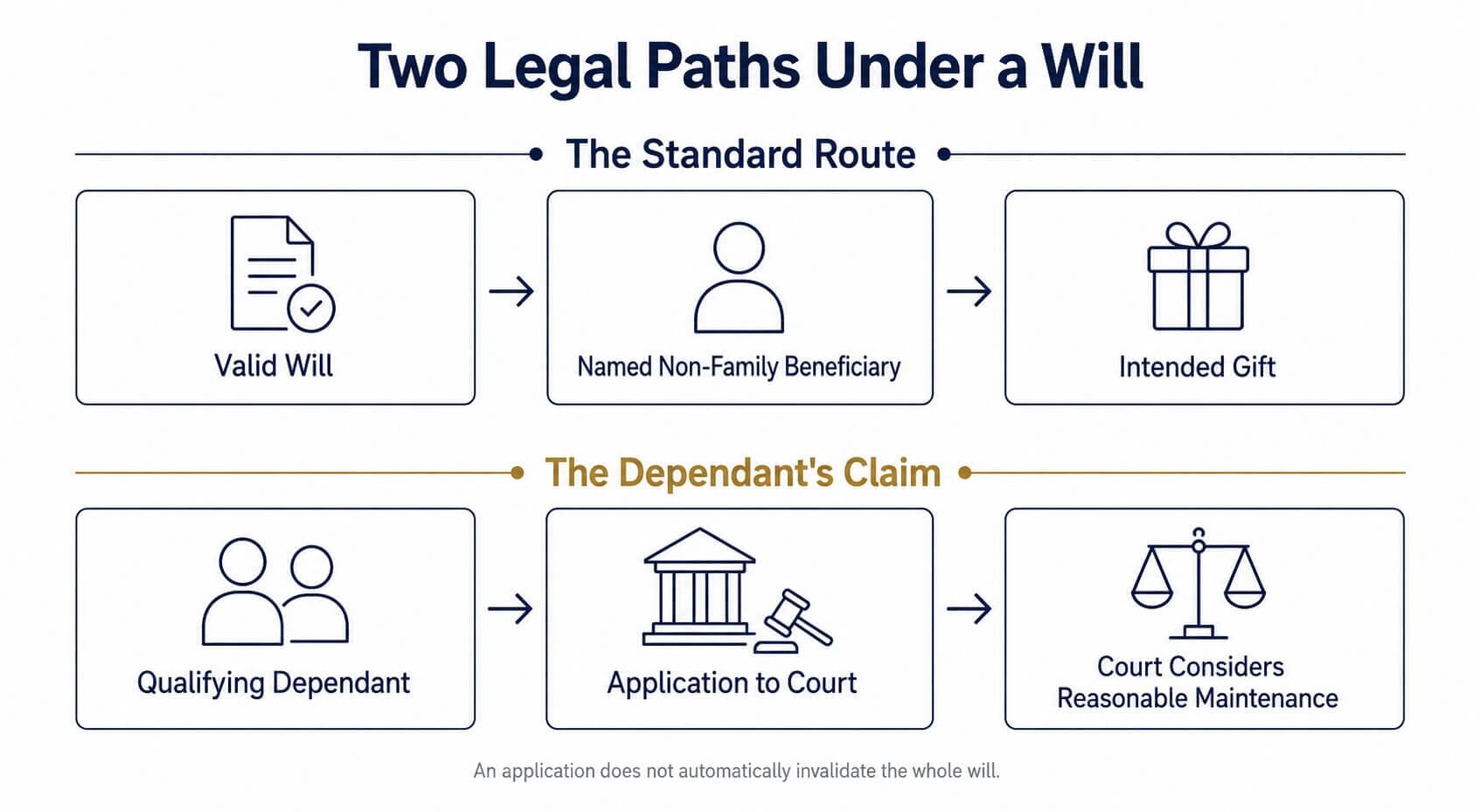
A description such as “my friend’s son” may become uncertain if several people could fit it. The will should identify the person accurately and should also address what happens if that beneficiary dies before the will-maker.
For a significant gift, the plan should include a substitute beneficiary or a clear direction for the failed gift. A residuary clause is also important because it states who receives assets that are not otherwise effectively distributed.
Remember that family members may still have legal rights
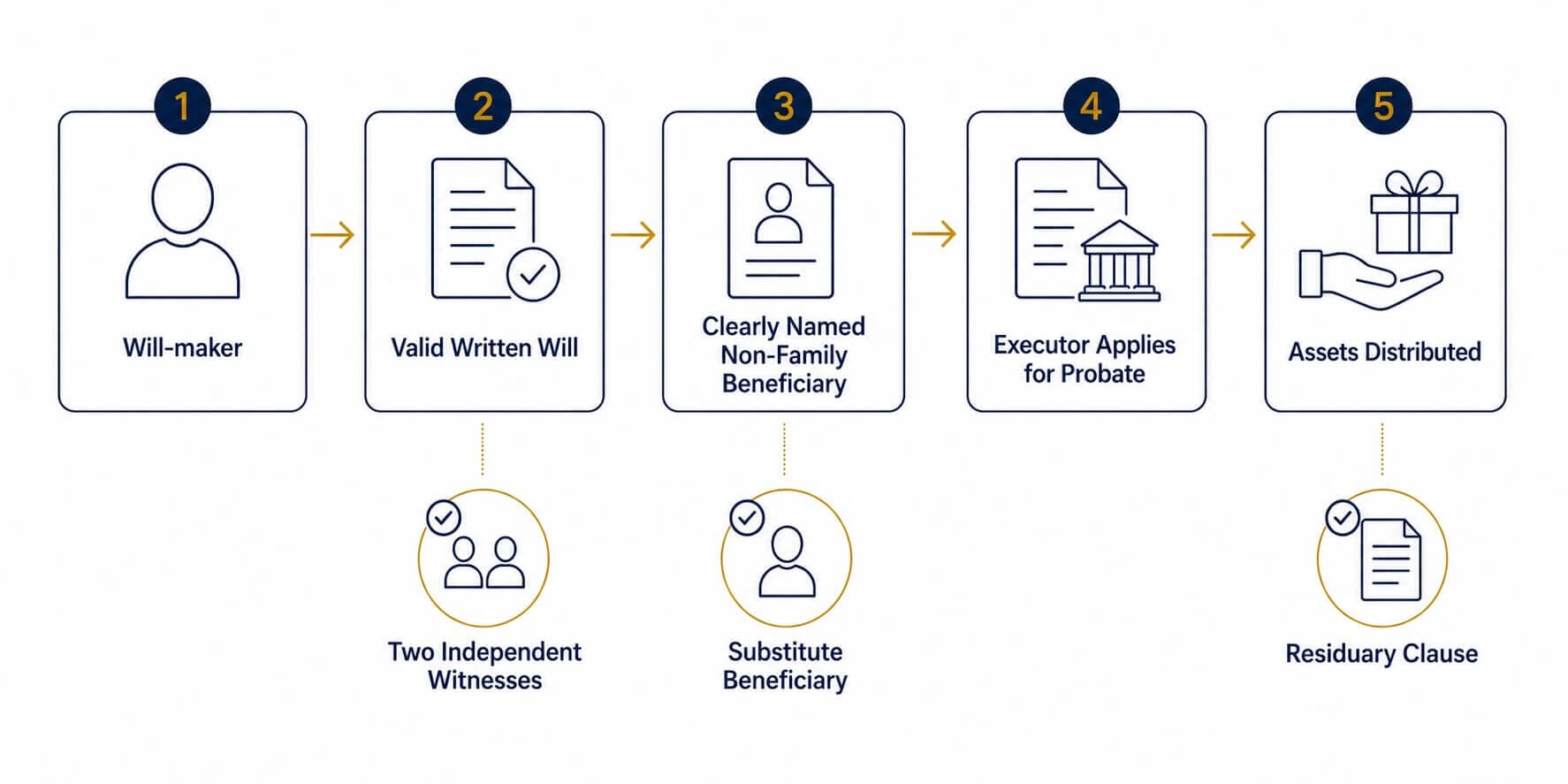
Leaving assets outside the family does not automatically prevent every claim. The Inheritance (Family Provision) Act 1971 may allow certain dependants to seek reasonable maintenance from an estate when the will does not make reasonable provision for them.
The risk is especially relevant when a substantial part of the estate is left to a non-family beneficiary while a spouse or dependant receives little or nothing. Proper advice, a record of the decision-making process and a coordinated estate plan can reduce uncertainty, although no document can guarantee that a dispute will never arise.
Different Rules Apply to Muslim Estate Planning
A Muslim who wants to leave assets to a non-family member in Malaysia should not rely on the rules governing a conventional non-Muslim will. Muslim estates are subject to Islamic inheritance principles and the applicable state or Federal Territory law.
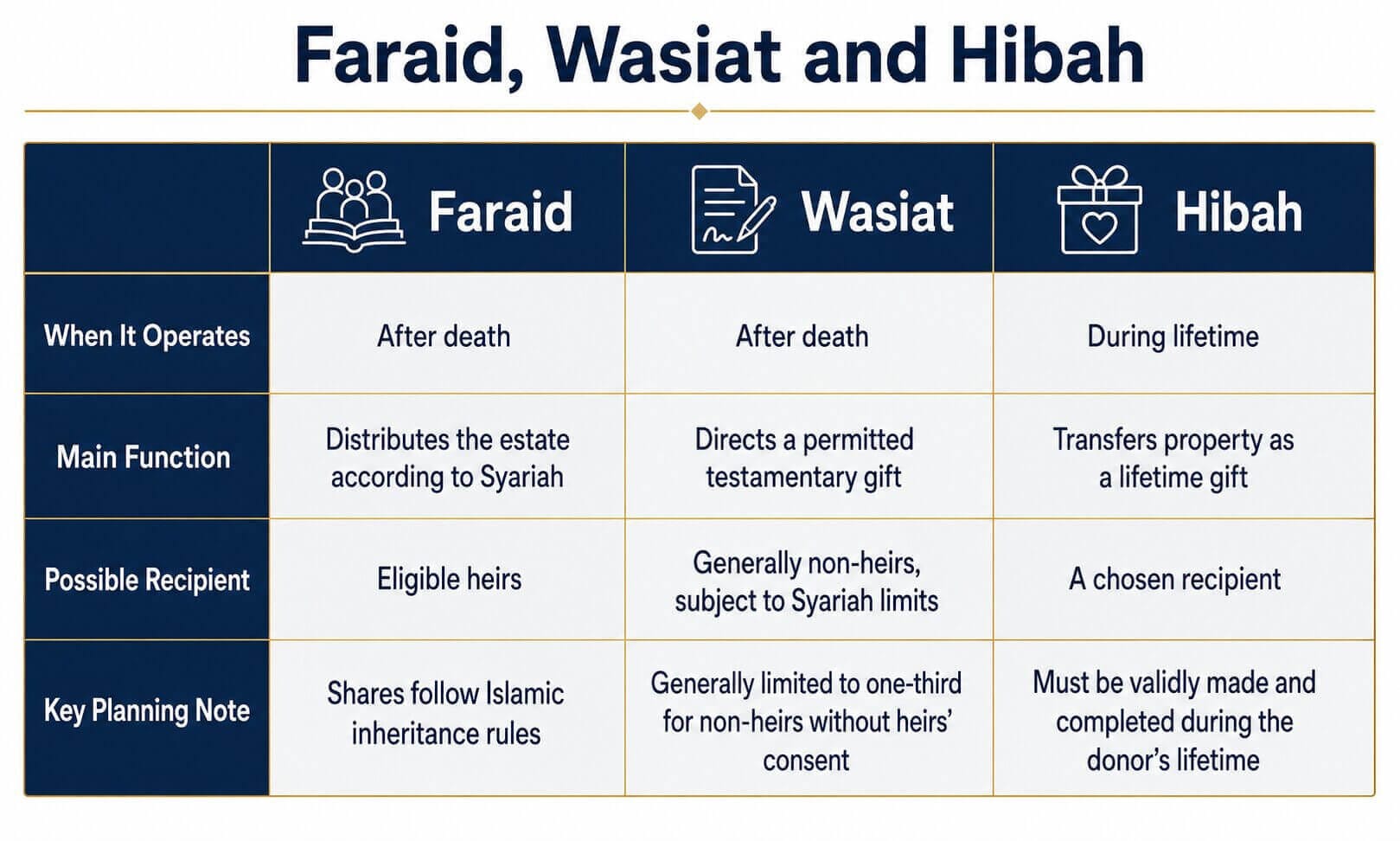
Faraid determines the prescribed shares of eligible heirs after estate expenses and debts are addressed. A friend’s child, adopted child, non-heir relative or charitable body may fall outside the group of Faraid heirs, but that does not necessarily mean the person cannot receive anything.
Wasiat for a non-heir beneficiary
A Wasiat may generally allocate up to one-third of the net estate, after funeral expenses and debts, to a non-Faraid beneficiary or charitable purpose. A bequest beyond one-third generally requires the consent of the Faraid heirs after death.
The exact requirements can vary by jurisdiction and circumstances, so any Hibah and Wasiat arrangement should be prepared or reviewed by a lawyer familiar with the applicable Syariah rules.
Hibah as a lifetime arrangement
Hibah is a lifetime gift rather than a testamentary gift that only operates through a will after death. It may be relevant when a Muslim owner intends to benefit a particular person, but its legal requirements, documentation, acceptance and treatment of the asset must be properly considered.
Hibah should not be treated as a label that can simply be added to an asset list. The intended gift must be structured and completed in a way that is legally and Syariah compliant for the asset involved.
Should You Use a Will, a Trust or a Lifetime Gift?
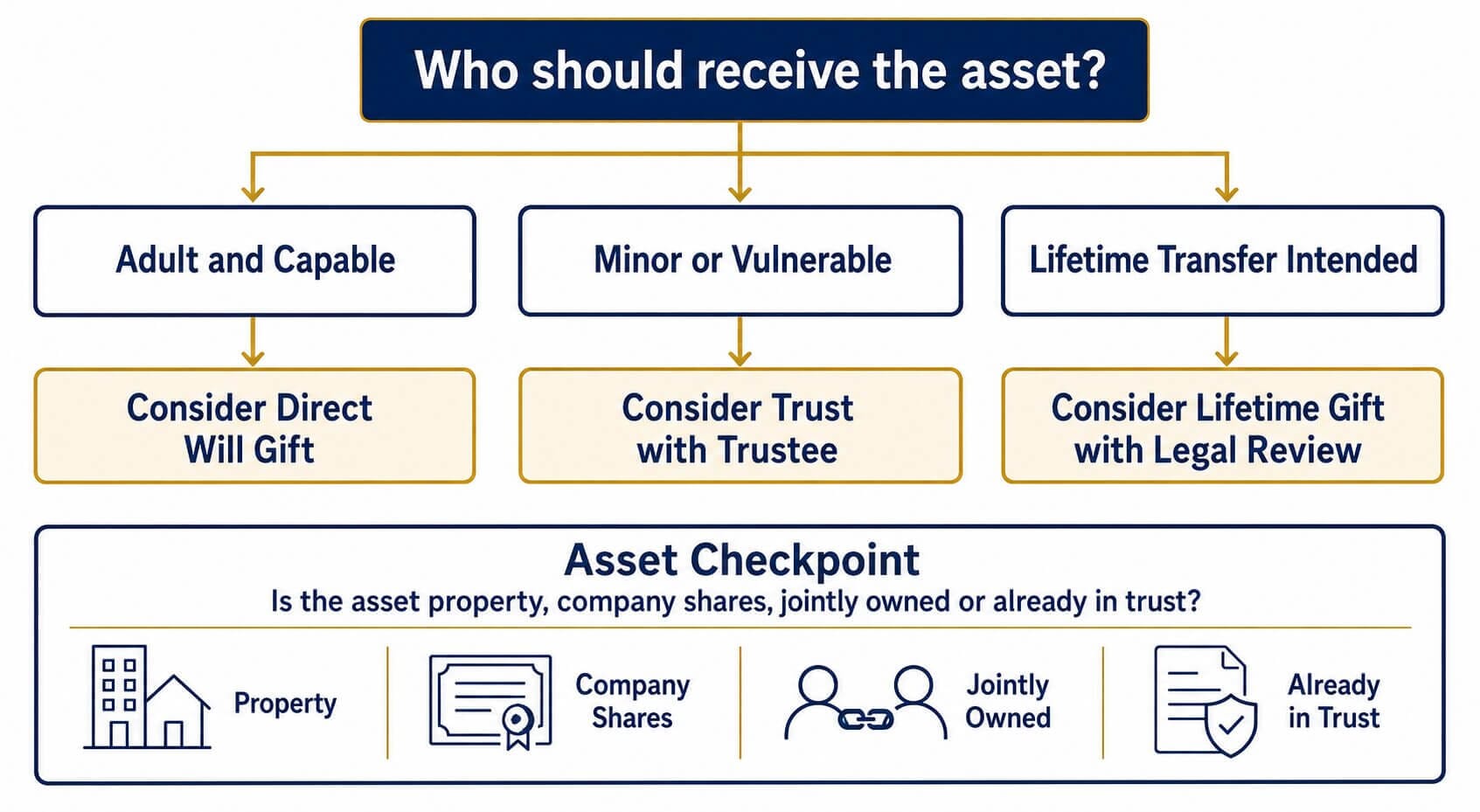
The right method depends on what the owner wants the beneficiary to receive, when the beneficiary should receive it and who should manage it. A direct gift through a will may be appropriate for an adult beneficiary who can manage the asset independently.
A trust may be more suitable when the beneficiary is young, financially inexperienced, vulnerable or expected to receive a substantial amount. A lifetime transfer may be considered when the owner genuinely intends to give up ownership during life and the legal, tax, financing and control implications have been reviewed.
Leaving an inheritance to a friend’s child
If the beneficiary is a minor, simply naming the child is not the end of the planning exercise. The will should appoint suitable trustees and explain how the inheritance is to be held, invested and released.
The plan may allow funds to be used for education, healthcare or maintenance before the beneficiary reaches a specified age. It should also state what happens if the child does not survive to receive the balance.
Conditions must be drafted carefully. A vague direction such as “use the money wisely” gives little practical guidance, while an unlawful, impossible or uncertain condition may fail.

Managing a meaningful or complex legacy
For a high-value estate, an outright gift can transfer control sooner than intended. A trust can separate legal management from beneficial enjoyment and allow distributions to be staged according to defined purposes or milestones.
Complex assets also require more than a name in a will. Company shares may be affected by a shareholders’ agreement or constitution. Property may be co-owned, charged to a bank or subject to consent requirements, while assets already held in trust may not form part of the personal estate at all.
Families with businesses, multiple properties or cross-border holdings may benefit from a coordinated Family Asset Execution Plan. This maps ownership, documents and responsible persons so that the intended transfer is practical rather than merely aspirational.
How to Make the Gift Clear and Workable
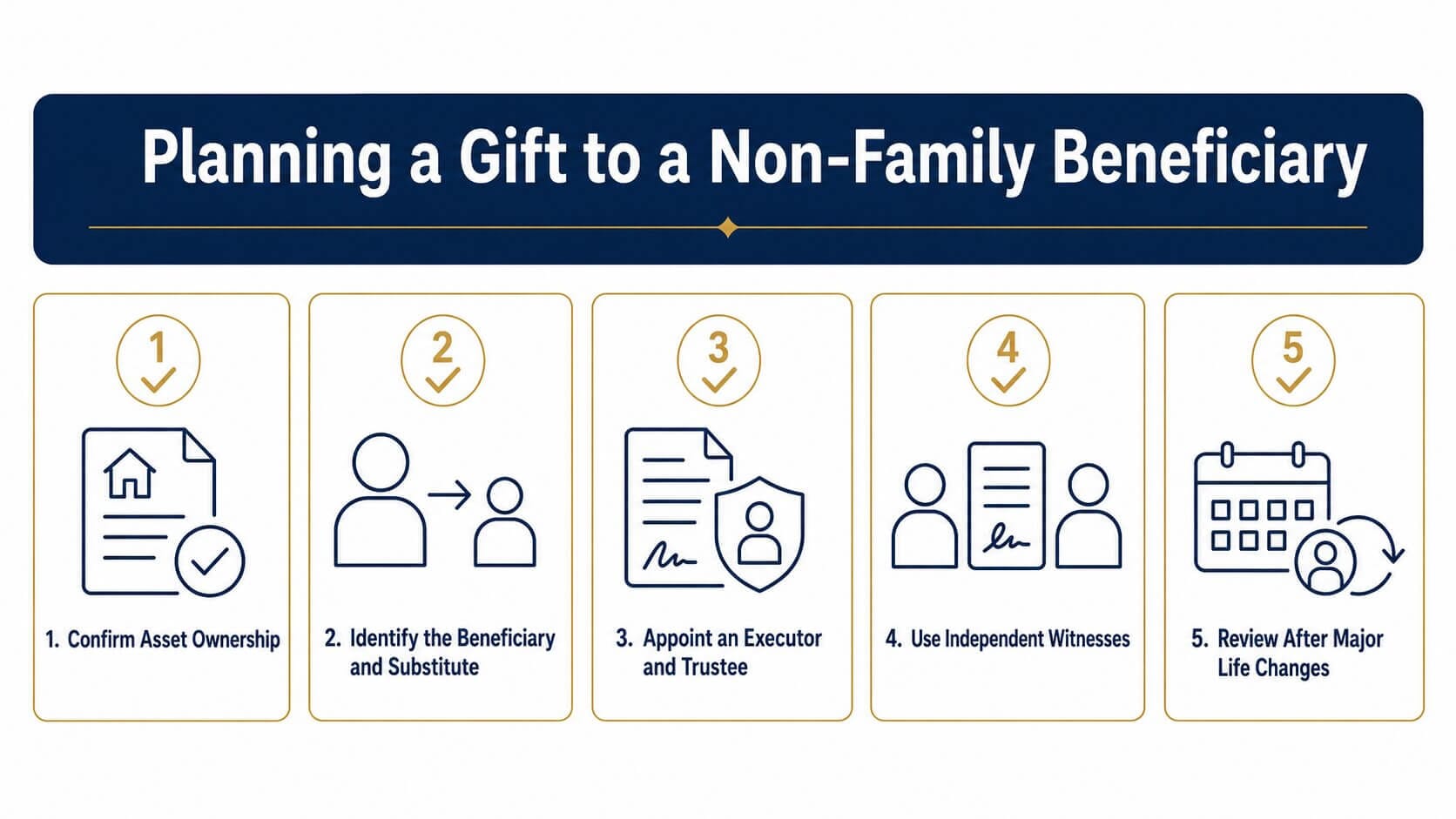
To make the intended gift workable, focus on five essentials:
- Confirm which assets the will can control. Jointly owned property, nominated benefits, trust assets and company shares may require separate arrangements.
- Identify the beneficiary clearly. Include sufficient details and name a substitute beneficiary in case the first recipient cannot inherit.
- Appoint suitable executors and trustees. They must be able to administer the estate and manage any continuing trust responsibly.
- Use independent witnesses. Under section 9 of the Wills Act 1959, a gift to an attesting witness or the witness’s spouse is void, although the will may otherwise remain valid.
- Review the plan after major changes. Marriage, divorce, death, a business transaction or a change in the beneficiary’s circumstances may affect the plan.
A lawyer can align the will, trust documents, nominations and ownership records, reducing the risk of conflicting instructions. After death, the executor of a valid non-Muslim will generally needs a Grant of Probate before administering estate assets; the probate process in Malaysia establishes that authority.
Turning Your Personal Wishes Into a Workable Legacy
It is generally possible for a non-Muslim to leave assets to a non-family member in Malaysia through a properly drafted and executed will. The beneficiary should be identified clearly, suitable substitutes should be named, and the plan should account for any dependant claims and assets that do not pass through the will.
For Muslim owners, the analysis is different. Faraid, Wasiat and Hibah must be considered under the applicable Syariah framework, including the general one-third limit for a Wasiat benefiting non-heirs.
The best structure also depends on the beneficiary. A direct gift may suit a capable adult, while a trust may be more appropriate for a friend’s child, a vulnerable person or a beneficiary who should receive the legacy gradually.
If you want to benefit someone outside your legal family, Sim & Rahman can review the intended beneficiary, asset ownership and appropriate succession structure. Speak with our trusted law firm in Malaysia to prepare an estate plan that expresses your wishes clearly and can be administered when it matters.